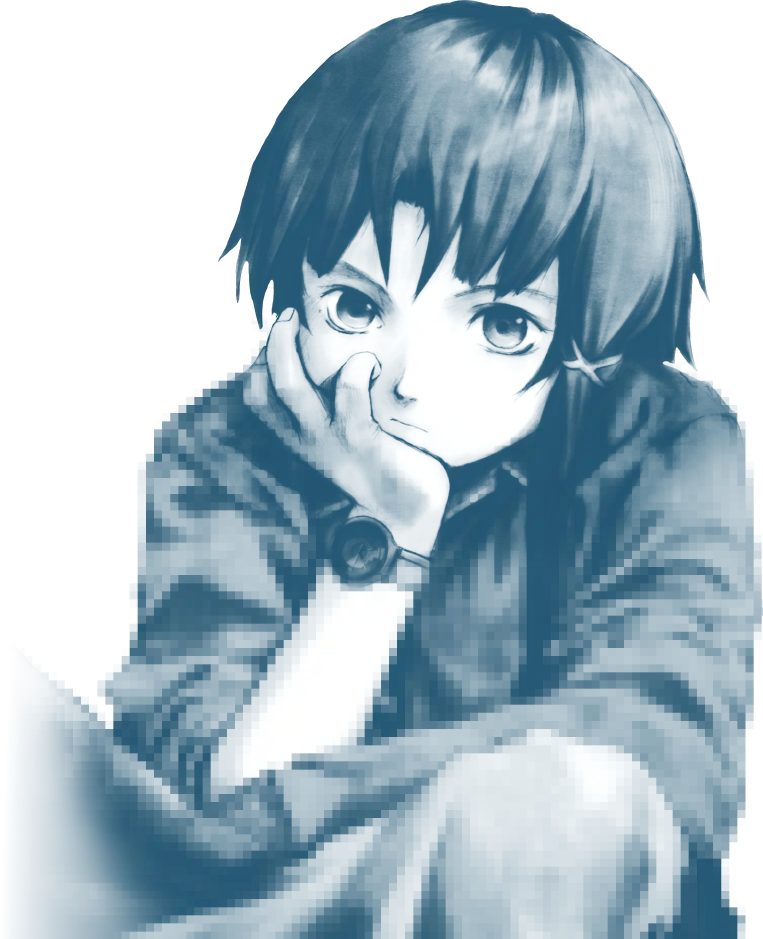
Old animanga fan yells at cloud
I don’t think I’ve ever completely felt part of a fandom community, even if the experience I had way earlier in my life was much better than today’s. I’ve written about this before, implying that online communities were “better” because their spaces were more confined, with their own set of specific rules, culture, and users accepting the community above themselves as individuals.
The relevant tacit keyword here is “identity.” Despite how easy it is to interact with others nowadays, I think today’s world feels homogeneous and boring, both online and offline. The late 90s and early 2000s shaped my idea of what the internet was for and how it worked on a social level. To me, my online identity was not meant to show much about my “real” self. My online identities were typically tied to hobbies or interests, and to the specific communities I was interacting with. When treating any subject, everything I had to worry about was the people I was talking to, not the possible outsiders. It was comfy, to a certain degree.
The online animanga “community” was the one I wanted to belong to the most, but never could. I romanticized it too much. Everything I saw was teenagers about my age, most of them a bit older, having fun watching and reading “weird” things. It was stuff you would get bullied for here, like Love Hina, Suzumiya Haruhi no Yuutsu, or even Neon Genesis Evangelion. But even though I thought of myself as “weird,” I found everyone else even weirder. A forum signature featuring some random anime girl in underwear meant no malice, but it didn’t click with me. That didn’t make me reject them: I think I rejected myself, because I thought I had to be more similar to them to fit in even online, so I kept certain distance. I also felt like I rarely had anything to say or do, so I wouldn’t share my thoughts about theories or other stuff. I would lurk, and not much more.
To be honest, I didn’t even enjoy anime or manga that much as a whole. Anime and manga are weird things to be a fan of, because in principle they’re just japanese animation and comics. There is something unique about them, though: the Japanese “nerd” industry was always bold in terms of topics, and that means you can end up disgusted, pleased, or puzzled over stories and tropes hard to find anywhere else. I suppose I found everyone else weirder than me because I only liked very few titles, and not to the degree eveyone else seemed to. I never felt like an “anime fan.”
As for online animanga spaces nowadays, I think, oversimplifying, that too many fans’ personalities derive from two general identities: neofascist gooners or anticapitalist puritans. The only good thing I see here is the anticapitalist part (although still not good enough to embed into EVERYTHING you say about animanga.) I believe most of them are edgy people in their early 20s and in the case of the “puritans” even younger, hence the term puriteens. That’s another thing I don’t like: there are very, very, few animanga nerd adults over 25 or 30 out there on the internet, and they don’t want to or simply can’t engage with fandoms the way they would have in 2005. In any case, most works will appeal better to their target demographic, which typically is not people my age.
When I say there are personalities that “derive” from those two, I don’t mean everyone is literally either of them, but that they gravitate close to one or the other. We live in an era of attention economy and rage baiting, and social networks will try to pull you toward one of those poles. I’ve said before that works by themselves don’t affect the world; it’s the relationship between the work and the observer that does, and that’s something that makes media diet analysis a necessarily rigorous task. That’s too hard. It’s way easier to assume human beings are either completely unaffected or deeply influenceable by what they see.
I suppose “profiction” or “proshipper” people typically don’t fit into either of those two groups, them being a loud minority. Personally, I refuse to call myself “profiction” because the way they word their ideas often makes it sound like the context of consumption doesn’t matter at all (like the individual’s education or how a platform presents the work). I stand by the idea that platforms trying to attract everyone instead of catering to a particular type of user/community is inherently stupid, yet that’s the big gear that keeps most of the internet in motion. You have no idea in what context someone might be when they come across your post on a microblogging platform.
There’s also too much drama now. Is it wrong that I think drama used to be fun? I tried getting closer to anitwt once, and it was awful. Way too much drama, and most of the time I didn’t know who the hell was involved. “This anime TikToker is stealing this other Tiktoker’s ideas!” I’m not even on TikTok, why am I seeing this? Forums had an “off-topic” or “general” subforum that I rarely visited, and at best today’s feed algorithms can learn that I want to see the “most popular” of a type of content all the freaking time (or never at all). I think the block feature wasn’t as common back then because people had less of a need to actually use it. “Just block and make your feed clean!” is something I’ve read over and over, which to me means something has gone terribly wrong.
Much of this drama is due to influencers, too. For some people it’s not enough to write reviews or make videos about anime. They need to have a community of their own so they can complain about this other person and inadvertently send a mob to harass them. Even when they think they’re doing good, I don’t think they’re able to see the real reason they find themselves doing so is because of the horrible logics of the platforms they’re on.
On platforms designed for communities, like Discord and Reddit, I can’t develop a communal bond because I can’t tell the individuals apart, and they’re not even based on anonymity. It all feels like a sea of sameness. People have message histories and are careful about their karma, but I’ll never remember a username and sometimes I feel they’re always trying to not say anything “unpopular.” I miss the individuality that shaped communities through names, avatars, signatures (even fanservicey ones) and personalities, and I dislike the individuality of today that only serves as a way to attract followers and likes.
And gatekeeping… Gatekeeping has always been a thing, but you shouldn’t think it refers to an elitist “we know better” behavior. You gatekeep based on any quality you can think of, and that was what old platforms did, in some way. I never minded not liking a community that I didn’t have to share a space with.
It’s never been perfect, I know. But back then we had something way closer to what I yearn for. The closest things there is now is very small Discord servers.
I admit this era has given me an infinite amount of fanart or simply drawn art to appreciate. Not belonging to any fandom in exchange for this doesn’t sound that bad. But now generative AI is starting to ruin my experience.